Tag Archives: Vasant Lad

Is Your Tongue Trying to Tell You Something Important?

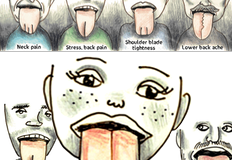
Palm Tongue Reading

Image Courtesy: http://www.sacredstonehealing.com/

We all have our pet peeves. Some hate when a toilet paper roll is placed the wrong way, others cringe their teeth at noisy eaters, and many of us dislike when someone is taking forever to order when there is a line (juice bar lunch line that is:)).

My biggest pet peeve is sick doctors or health promoting practitioners and counselors who are not well. It is almost impossible to have a complete clarity of mind, effective judgement, and a kind compassion for all the patients when your body is not well. I strongly believe that one of the most important requirements for a health practitioner or a wellness coach should be optimal health. In ayurveda it is mandatory and achieved partially through following dinacharya – a health-promoting daily routine.

While I am not a doctor and not an ayurvedic practitioner, as a health coach I feel a lot more comfortable working with my clients when I feel strong and healthy. There is a lot more authenticity and integrity in a client/coach relationship when a coach is glowing with health and has a ton of energy to share.

A person who is well and strong is inspirational, someone who is sick should not be advising others on how to get better. That advise is not coming from a personal experience, it does not carry authenticity in it, it is not coming from the heart.

Unfortunately most doctors working in the traditional medicine field are not well. However, they are very well off from selling all the prescription drugs!

As a wellness coach I strive to stay at the optimal point of health possible to be able to inspire, motivate, and support my clients.

Show Me Your Tongue and I Will Tell You How You Are.

How do I know that I am well and healthy? Good question!

A huge part of health is how you feel inside of your body. Is it comfortable? Light? Easy to move? Does it have a lot of energy? Do you feel like you want to inspire and help others with the surplus of your energy? If you answered yes to most questions, your body should be pretty healthy.

There are some other ways to check your health state without any pins and needles. All you need is a mirror!

Morning Tongue Analysis – an Ayurvedic Health Assessment Technique

When I was little my parents, both doctors, always asked me to show my tongue if I complained of a not feeling well. More than 10 years later, I finally started to learn what exactly they were looking for… The  tongue is a detailed health map! The same way as the face, the tongue changes colors/shades, shape, and surface texture providing a current health state update. Much like reflexology, all the organs and the entire body can be located on specific regions of the tongue. As a mirror of the body’s digestive system, the tongue can reflect what minerals and vitamins may be deficient and can reveal the health of other various organs in the body.

Trained Ayurvedic practitioners will be able to provide a complete health analysis by examining patient’s tongue. Dr Vassant Lad says that it contains a wealth of information and that every person should learn how to read the body’s messages on their own tongues.

It takes years to learn the intricacies but there are some general guidelines that anyone can use to evaluate general health level/condition: The first thing the tongue shows us is if any one dosha is out of balance. Divide the tongue into three parts; the root is Vata, the middle is Pitta, and the tip is Kapha. Excessive coating in any of these areas shows which dosha is involved.

Generally dosha disturbances show up in the following ways:

Image Courtesy http://www.ayurvedic.ie/

  • Vata disturbances on the tongue – Small cracks all over the tongue; Dry, dark tongue; Film over the back of the tongue; Rough back area; Small dark pimples; and Black to brown coloration on the tongue.
  • Pitta disturbance on the tongue – Red tongue; White cold sores; Bumps or bright red patched areas in the middle of the tongue; Greenish or yellowish film on the tongue; and Film on the middle section of the tongue.
  • Kapha disturbances on the tongue – White thick coating tongue; Oily film on the tongue; Depressions or bumps on the front portion of the tongue; and Tip of the tongue whitish or coated.

Some other things to look for:

  • Teeth imprints around the contour of the tonguemalabsoprion of nutrients. Your digestive system is not very happy. To stimulate digestion in a natural healthy way, add fresh ginger tea, avoid iced drinks and start paying attention to food combining. Here is an article on Ayurvedic Food Combining.
  • Trembling tongue - a sign of anxiety or fear, possible Vata disturbance. We live in such a high stress society that anxiety can crawl over you without you even being aware of it. It might even be your permanent state and you are so used to it that can’t tell the difference. Forgot when was tge last time you woke up rested and excited to start your day? Thought so! Time to take a break from caffeine, have some chamomile tea and nourish your nervous system with warm, easy to digest light soups and bean dishes.
  • Thick grayish coating – Toxins in colon. Did you think about doing a detox but couldn’t think of a strong enough incentive. Welcome to the club! Knowing that your colon is full of material that doesn’t belong there, that spreads toxins into your blood, makes you sluggish, your skin greyish and your head foggy might be the push you were waiting for. Take a break from heavy, oily and processed foods. No need to fast if you are not ready for it but make it a vegetable or fruits day only. Choose foods that are easiest to digest. If you make is a vegetable day, go for steamed not raw, same with fruits, baked apples with cinnamon is my choice when I do one day food break. You won’t feel hungry or tired because apples provide plenty of natural sugars and fiber to keep you full and energized. Your body will feel so fresh and light the next day, you might want to make it a weekly treat. You take a break from work why not give your digestive system a break also?

Dr Lad advises to look at the tongue in the morning before brushing your teeth. He also strongly encourages the use of a tongue scrapper on a daily basis. Why walk around with a ton of toxins if you can just scrape them off?!

What does your tongue say? What does it look like?

If you see me in class next Tue at Strala, don’t be shy to stick your tongue out!

Don’t forget to subscribe to Spinach and Yoga on the top right and like Spinach and Yoga on Facebook. I finally created a facebook page and will be sharing all digestion, ayurveda, and mindfulness tips there!

Love and lightness to your bodies!

Nadya

Indigestion Guru Spills Her Secrets

Hello wellness warriors,

Today, I am very excited to to share something very special! A new friend of mine and an amazing ayurvedic practitioner, Dr Helen Thomas, shares some of her wisdom with us! Dr Helen studied with Deepak Chopra and Vasant Lad and now has a thriving practice in CA. She is the author of multiple book of health and ayurveda. Recently, she expanded her private practice to offer an online course called Colon Karma Cure. Isn’t it a cool name?! She calls herself and Indigestion Guru! I love it! The program offers weekly newsletter with tips and audio files with lectures on how to Cure Bad Colon Karma :) or basically, how to make your belly happy and healthy.

We had so much to discuss in our interview that I broke it down in several parts. Mind Body Green published a big piece of the interview, Modern Hippie Mag will cover individualized diets and the effects of stress on digestion, and I kept Dr Helen’s view of Raw Food Movement, her advice on using spices, and a glimpse of her daily diet for Spinach and Yoga. Here we go:


Nadya: Ayurveda is heavy on using spices that are specific to body types. In ayurveda spices are used for flavor and their healing properties. There’s a movement of people that advise against the use of spices as it may stimulate overeating. Their reasoning is that spices make the food taste different from what the nature intended and we don’t taste the plain ingredients as a result it is easy to eat more than the body requires. They also say that in the ancient times when our ancestors were mainly gathering and hunting, that they didn’t use spices. What do you think is the right answer? Should one use spices?

Dr Helen: I can only answer from an Ayurvedic perspective. In Ayurveda, we believe that spices improve digestion by stimulating the production of enzymes and improving circulation. Adding a little bit of spice in your food is similar to taking the popular nowadays digestive enzymes.

Another important aspect of using spices in cooking is the understanding of food and emotion connection. Ayurveda considers an emotional component of eating to be very important. Food should smell good and taste good to fulfill an emotional need. If you don’t have time to cook and enjoy your meal, you are not cultivating an emotional satiation in relationship to your whole experience as being a human being. That’s why people eat on the go, while driving or walking, will never feel completely satisfied and will always crave more.

Spices can be used for taste but they have powerful healing properties and it is important to use them according to dosha.  If you’re a Kapha type struggling with weight issues, than you need to use pungent, bitter, and astringent spices to stimulate metabolism. Spices that are sweet, sour and salty are contraindicated as they will lead to water retention and overeating. That’s just one example of why you have to use spices according to your body type.

Nadya: What do you think about a recent trend of juicing and raw foods? Is it healthy?

Dr Helen: Not all raw food is equal, some of it is easier to digest than other.  If you include soaked grains, ground up soaked seeds and a little bit of nuts, then it should be okay. However, Vata types would not feel well after eating a raw salad made with coarse hard vegetables like broccoli or cauliflower. Some might even develop a stomachache. I think the raw foods movement is bringing a lot of good things to the table and everyone should try experimenting with making some raw dishes at home. The key is to add a little bit of healthy oils and grains even if it’s raw. But I do not recommend just plain hard raw vegetables for Vata types or people with a weak stomach.

Nadya: As an Ayurvedic doctor, do you live by what you preach? What do you usually eat on a day to day basis?

Dr Helen Thomas: Kitchari is my go-to breakfast. The recipe is very simple: ½ cup rice and ½ cup moong dal; boiled in water with a teaspoon of turmeric and a little salt. At lunch I usually have a grain-based dish like quinoa with veggies. For dinner, I can have chicken soup or fish. I also like boiled milk, dates, figs, almonds, and pine nuts when I need a boost of energy.

Nadya: For people who sign up for the Colon Karma Cure program, how long does it take for a sensitive stomach to heal and for digestion to become stronger if a person is following general Ayurvedic guidelines?

Dr Helen:  About six weeks. We have many testimonials from people who have taken the Colon Karma Cure raving about the program and how it significantly improved their digestion.

The Colon Karma Cure is a wonderful program that offers a wealth of knowledge on Ayurveda and digestion. Dr Helen makes the sometimes confusing ancient ayurvedic wisdom accessible and easy to apply in your own kitchen.

Your turn to be interviewed! Please share your thoughts in the comment section below!

1. Do you use spices? How do you decide which ones to use?

2. Have you tried juicing and raw food? How did your belly react?

Would love to hear from you!

PS: If you want some help creating your Personal Wellness Vision and finding strategies that will work for you to reach it, check out my Services page and email me at nadyaand @ gmail dot com

PPS: We still have a few spots left for the India Adventure. Join me! It will be so much fun and it will change your life!!!

An Exclusive Interview With Dr Vasant Lad

A Legend of Ayurveda

A couple of months ago I went to the Ayurvedic Institute in Albuquerque, NM to take a workshop with the super-star of modern-day ayurveda Dr Vasant Lad. I learned for much that I couldn’t wait to share some of the knowledge with you, my dear readers! After a few weeks of persistent emails Dr Lad agrees to do a phone interview with me and share some of his precious knowledge.

In this interview we talked about:

  • Ayurvedic Energy Drink
  • Treating ADHD naturally
  • Yoga From an Ayurvedic Perspective
  • Digestion and its Connection to Disease
  • Snacking and Cravings
  • Dr Lad’s Secret to Longevity and Energy
  • Happiness
  • And Summer Wellness Tips

You can read the interview here. Share it with your healthy or not-so-healthy friends! Spread the wisdom!

Be well,

Nadya

5 Herbs To Meditate Better and Stay Young

Hello yogis and healthy folks!

Hope you are all enjoying warmer weather and spending lots of time outside. It is still a little chilly in NYC but last weekend I was lucky enough to go to the Ayurvedic Institute in a sunny Albuquerque, NM. The trip was for a workshop on 15 most powerful ayurvedic herbs led by the legend of ayurvedic world – Dr Vasant Lad.

I got to stay at an amazing Casa Paz Y Amor, go running close to the mountains, meet the founder and the R&D head of Banyan Botanicals, and to learn the secrets of longevity and youthfulness from Vasant Lad himself.

Casa Paz Y Amor

You have probably heard about Gotu Kola and Ginkgo Biloba healing properties. Chinese herbal supplements are pretty wide-spread in the North America and a lot of people take advantage of the available natural alternatives to the traditional medicine. Ayurvedic herbal formulations seem to be less common in the West even though they are as powerful as the Chinese ones.

Banyan Botanicals Herbs Sample

Today I want to share 5 of the most powerful and useful ayurvedic herbs that are widely available in most health stores, including Whole Foods but are not as recognized yet by an average shopper.


Shatavari -  a perfect female tonic. Shatavari is a rejuvenating herb that cools the body and strengthens and nourishes the tissues. It is used to treat hyperacidity, gastric and peptic ulcers, stomach collics, inflammations, and can be helpful during morning sickness. The most important and most frequent use of Shatavari is to alleviate menstrual cramps and PMS and to maintain a healthy production of female hormones. It rejuvenates female reproductive system and maybe translated from Sanskrit as “100 spouses” implying its role in promoting fertility and vitality. As a nutritive tonic it encourages the healthy production of milk in lactating mothers and is useful for supporting the menopausal transition. Shatavari supports a healthy immune system and assists in both physical and digestion. It can be taken on its own or as a part of a formula.

Triphala -  a beautiful balancing formula for detoxification and rejuvenation. Triphala is recommended and used more than any other Ayurvedic herbal formulation. Popular for its unique ability to gently cleanse and detoxify the system while simultaneously replenishing and nourishing it, this traditional formula supports the proper functions of the digestive, circulatory, respiratory and genitourinary systems. Translated as “three fruits”, it is composed of the dried fruits of amalaki, bibhitaki and haritaki. Containing five of the six tastes (all but salty), Triphala readily removes excess vata, pitta and kapha from the body, bringing balance and proper functioning to the system. It is commonly taken as a daily supplement to help maintain balance of the doshas.

Brahmi - Those familiar with “the doctrine of signatures” may not find it surprising that a plant with a leaf that resembles a cerebellum, would have a special affinity for the brain. Brahmi is a renowned mental rejuvenating herb traditionally used to promote the intellect, enhance mental performance and support proper function of the nervous system. The leaves are highly sattvic (pure, harmonious) and historically have been eaten by yogis to assist in meditation. Brahmi is said to improve concentration, memory and alertness. It is a natural blood purifier and helps support clear, healthy skin. Brahmi is also famous for promoting healthy, lustrous hair and is often applied as an oil for this purpose. The herb is cooling and relaxing, making it an excellent tonic for pitta. It also calms vata in the mind and reduces excess kapha in the body. A truly amazing herb that lives up to its name, which means “the energy of universal consciousness”

Ashwagandha – Ashwagandha is one of the most highly regarded and commonly used adaptogens in the Ayurvedic pharmacopoeia. Maximizing the body’s ability to resist stress, it enables the body to reserve and sustain vital energy throughout the day while promoting sound, restful sleep at night. It is considered one of the best herbs for calming vata and for revitalizing the male reproductive system. Used by both men and women, it maintains proper nourishment of the tissues, particularly muscle and bone, while supporting proper function of the adrenals. This potent herb is used to promote muscle strength and to support comfortable joint movement. It is also used to maintain a healthy libido, for it is said to bestow upon its user the vitality and strength of a horse. As a rejuvenative, Ashwagandha is particularly useful to seniors and for anyone that would benefit from a nourishing, natural source of energy.

Neem – Traditional skin purifier and often used to naturally control blood sugar levels. Neem is widely used in Ayurveda because of its effectiveness in dealing with nearly all types of pitta and kapha imbalances. Bitter and very cooling, it is usually combined with other herbs to offset its vata-aggravating qualities. Neem has traditionally been used to purify the blood, cleanse the liver and support the immune system. It is also commonly used to support healthy skin and to maintain healthy blood glucose levels. As a powerful blood purifier that helps to remove toxins from the blood, lymph and liver supporting vibrant, Neem helps to maintain healthy glowing complexion.

Let me know if you have any question about the herbs! A very interesting interview with the founder of Banyan Botanicals is coming soon! Stay tuned!

Nadya