Tag Archives: Vata

Dessert Turned Balanced Dinner

Daal Payasam – The Most Unusual Healthy Dessert

It’s been awhile since I posted any recipes. My diet is pretty simple most days and consists out of one-pot lentil and quinoa with veggies stews, salads, and soups. I’m more about functionality and digestibility when it comes to my foods rather than gourmet dishes. If it’s easy to make, simple, and easy to digest, it gets my approval.

The recipe that I about to share was inspired by a recent visit to one of my favorite vegetarian Indian restaurants in Murray Hill. I kept thinking about this dish for a few days after and tried to create my own version at home. It came out so good that I think it deserves sharing. It is an unusual combination of tastes for a Western palate – lentils, raisins, coconut, cardamom, and dates. It might sound too weird but surprisingly it tastes pretty damn good!
Vegan Daal Payasam – Split Lentil Pudding

  • 1 cup red split lentil (soaked overnight)
  • 5 cups water or non dairy milk
  • 2 dates (chop up and take the pits out, I used 1 coconut/date roll instead)
  • 1/2 cup raisins
  • 1/2 cup coconut flakes or can use cashew halves instead
  • 1 tsp coconut oil or ghee
  • 6 pods cardamom
  • A few strands of saffron
  1. The original recipe calls for a slow cooker and roasting nuts and raisins beforehand in ghee but to save time, I just put everything together in one pot, added water and let it boil.
  2. Once the water or milk, if you are using it, starts to boil, reduce the heat and stirring occasionally, let it simmer until lentils become very soft and the water almost completely evaporates. It should turn into a quick soup consistency.
  3. Enjoy it warm as a separate meal. It is pretty hearty but not heavy. Lots of fiber, iron, and needed grounding for Fall-aggravated Vata dosha.

For more Vata-balancing desserts, check out this post. You can also read more about Vata dosha here.

If you want more Fall-inspired healthy recipes, register to my upcoming lecture on October 10th.

Is Your Tongue Trying to Tell You Something Important?

Palm Tongue Reading

Image Courtesy: http://www.sacredstonehealing.com/

We all have our pet peeves. Some hate when a toilet paper roll is placed the wrong way, others cringe their teeth at noisy eaters, and many of us dislike when someone is taking forever to order when there is a line (juice bar lunch line that is:)).
My biggest pet peeve is sick doctors or health promoting practitioners and counselors who are not well. It is almost impossible to have a complete clarity of mind, effective judgement, and a kind compassion for all the patients when your body is not well. I strongly believe that one of the most important requirements for a health practitioner or a wellness coach should be optimal health. In ayurveda it is mandatory and achieved partially through following dinacharya – a health-promoting daily routine.

While I am not a doctor and not an ayurvedic practitioner, as a health coach I feel a lot more comfortable working with my clients when I feel strong and healthy. There is a lot more authenticity and integrity in a client/coach relationship when a coach is glowing with health and has a ton of energy to share.

A person who is well and strong is inspirational, someone who is sick should not be advising others on how to get better. That advise is not coming from a personal experience, it does not carry authenticity in it, it is not coming from the heart.

Unfortunately most doctors working in the traditional medicine field are not well. However, they are very well off from selling all the prescription drugs!

As a wellness coach I strive to stay at the optimal point of health possible to be able to inspire, motivate, and support my clients.

Show Me Your Tongue and I Will Tell You How You Are.

How do I know that I am well and healthy? Good question!

A huge part of health is how you feel inside of your body. Is it comfortable? Light? Easy to move? Does it have a lot of energy? Do you feel like you want to inspire and help others with the surplus of your energy? If you answered yes to most questions, your body should be pretty healthy.

There are some other ways to check your health state without any pins and needles. All you need is a mirror!

Morning Tongue Analysis – an Ayurvedic Health Assessment Technique

When I was little my parents, both doctors, always asked me to show my tongue if I complained of a not feeling well. More than 10 years later, I finally started to learn what exactly they were looking for… The  tongue is a detailed health map! The same way as the face, the tongue changes colors/shades, shape, and surface texture providing a current health state update. Much like reflexology, all the organs and the entire body can be located on specific regions of the tongue. As a mirror of the body’s digestive system, the tongue can reflect what minerals and vitamins may be deficient and can reveal the health of other various organs in the body.

Trained Ayurvedic practitioners will be able to provide a complete health analysis by examining patient’s tongue. Dr Vassant Lad says that it contains a wealth of information and that every person should learn how to read the body’s messages on their own tongues.

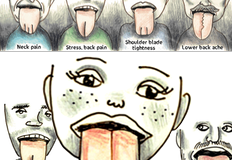
It takes years to learn the intricacies but there are some general guidelines that anyone can use to evaluate general health level/condition: The first thing the tongue shows us is if any one dosha is out of balance. Divide the tongue into three parts; the root is Vata, the middle is Pitta, and the tip is Kapha. Excessive coating in any of these areas shows which dosha is involved.

Generally dosha disturbances show up in the following ways:

Image Courtesy http://www.ayurvedic.ie/

  • Vata disturbances on the tongue – Small cracks all over the tongue; Dry, dark tongue; Film over the back of the tongue; Rough back area; Small dark pimples; and Black to brown coloration on the tongue.
  • Pitta disturbance on the tongue – Red tongue; White cold sores; Bumps or bright red patched areas in the middle of the tongue; Greenish or yellowish film on the tongue; and Film on the middle section of the tongue.
  • Kapha disturbances on the tongue – White thick coating tongue; Oily film on the tongue; Depressions or bumps on the front portion of the tongue; and Tip of the tongue whitish or coated.

Some other things to look for:

  • Teeth imprints around the contour of the tonguemalabsoprion of nutrients. Your digestive system is not very happy. To stimulate digestion in a natural healthy way, add fresh ginger tea, avoid iced drinks and start paying attention to food combining. Here is an article on Ayurvedic Food Combining.
  • Trembling tongue - a sign of anxiety or fear, possible Vata disturbance. We live in such a high stress society that anxiety can crawl over you without you even being aware of it. It might even be your permanent state and you are so used to it that can’t tell the difference. Forgot when was tge last time you woke up rested and excited to start your day? Thought so! Time to take a break from caffeine, have some chamomile tea and nourish your nervous system with warm, easy to digest light soups and bean dishes.
  • Thick grayish coating – Toxins in colon. Did you think about doing a detox but couldn’t think of a strong enough incentive. Welcome to the club! Knowing that your colon is full of material that doesn’t belong there, that spreads toxins into your blood, makes you sluggish, your skin greyish and your head foggy might be the push you were waiting for. Take a break from heavy, oily and processed foods. No need to fast if you are not ready for it but make it a vegetable or fruits day only. Choose foods that are easiest to digest. If you make is a vegetable day, go for steamed not raw, same with fruits, baked apples with cinnamon is my choice when I do one day food break. You won’t feel hungry or tired because apples provide plenty of natural sugars and fiber to keep you full and energized. Your body will feel so fresh and light the next day, you might want to make it a weekly treat. You take a break from work why not give your digestive system a break also?

Dr Lad advises to look at the tongue in the morning before brushing your teeth. He also strongly encourages the use of a tongue scrapper on a daily basis. Why walk around with a ton of toxins if you can just scrape them off?!

What does your tongue say? What does it look like?

If you see me in class next Tue at Strala, don’t be shy to stick your tongue out!

Don’t forget to subscribe to Spinach and Yoga on the top right and like Spinach and Yoga on Facebook. I finally created a facebook page and will be sharing all digestion, ayurveda, and mindfulness tips there!

Love and lightness to your bodies!

Nadya

Quick Power Up Breakfast Bread (Gluten, Sugar, Fat Free)

Kamut Carrot Apple Bread!

There are days when there is barely any time to take a slow breath and definitely no time to cook a healthy breakfast. If you are familiar with a feeling and anxiety and being overwhelmed from the early waking hours and running around on coffee until late afternoon, I hope this recipe will help.
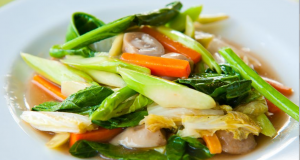
Breakfast is important, we all know that. According to ayurveda, Vatas need breakfast the most! If you are predominantly Vata (check it out) skipping breakfast will leave you feeling spacey, nervous, and worried for no reason. Vatas need grounding and nourishment. Without it we quickly wilt.

Pittas need to eat regular meals, too, but Kapha’s can easily skip breakfast and have an herbal spicy tea instead. Pittas can do well on a juice or a smoothie in the morning but Vatas, according to ayurveda need a more sustainable breakfast with grains or baked fruit.

If you are constantly in a rush making a healthy nourishing breakfast ahead of time serves as a good strategy. Looking for a light, gluten free, no added sugar, and low fat breakfast that contains some grains to ground me, I created this yummy Kamut Carrot Apple bread. You can whip it up in mins in the evening and keep it for a few days for those stressful mornings.

Kamut Carrot Apple bread 

Ingredients:

  • 1 cup Kamut flakes or regular oats
  • 1 tsp baking powder
  • 1 apple 1.5 cups of carrots
  • 2 handfuls of soaked raisins
  • 5 soaked blacks figs (chopped)
  • 2 large soaked dates (pitted and chopped)
  • 2 handfuls of sprouted sunflower seeds or pumpkin seeds
  • 4 eggs
  • 2 tsp ground flax
  • 2 tsp chia seeds
  • 3-5 tbsp carob powder or cacao powder
  • Splash of almond milk
  • Cinnamon, nutmeg, vanilla,  cardamon to taste. I like a lot!

What to do:

  • Mix it all by hand. Oil baking pan with grapeseed oil or coconut
  • Bake for 20 min at 350
  • Cool. It will keep in fridge for 3-4 days.

The bread is light, soft, and will keep you full for a while. Since all nuts and dried fruit are soaked, they are easier to digest even for a sensitive belly.

Kamut is an amazing high protein gluten free grain. If you’ve never tried it, check it out!

How do you stay healthy when life gets busy? Please share your tips and tricks!

Don’t forget to subscribe to Spinach and Yoga to get all notifications about new posts!

If you are still working on figuring out the best well-being plan for yourself, get a wellness consultation scheduled today. I would love to help you find the best strategies that work for you and your schedule!

Don’t go hungry!

Nadya

Food Combining 101

Basics of a Healthy Digestion

Recently, I wrote an article for Mind Body Green on food combining  10 worst food combinations that can wreak havoc on your health. The response was overwhelming with over 2 thousand people liking the article on facebook. If you haven’t read it, please check it out, it’s a fun read!
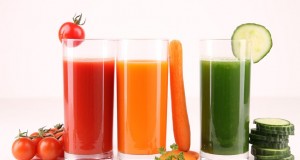
Since then, I was getting quite a few emails, comments, and fb messages regarding food combining rules and specifically, how strict do we need to stick to these dire rules. Some people see food combining as a potentially beneficial but a very challenging undertaking, others bluntly, disagree that traditional dishes like fruit and yogurt or tomatoes and cheese can cause any digestion difficulties.

If you are wondering whether food combing is something that you can benefit from and where to start with it, here is a quick guide.

Why food combining is important:

  • We need different enzymes to digest card, proteins, and fats
  • Some foods take a lot longer to digest than others. If you eat slow-to-digest and fast-to-digest foods together, the faster-digesting food will have to sit and wait for the slower one fermenting and petrifying.
  • Eating easy-to-digest food combinations frees up a lot of energy resources that can be used for other purposes besides digestion (healing, workouts, dancing, having fun!)

Benefits of good food combining include:

  • Improved energy levels
  • Healthy weight loss if your body needs it
  • Better skin
  • Better absorption of nutrients
  • Reduction of bloating and gas
  • More regular elimination

If you feel like your energy level is not high enough, if acne is a persistent problem, or if your stomach is bloated/constipated/gassy after meals, food combinations is one of the easiest things to experiment with since it does not forbid any food groups and there are no severe detox symptoms.

There are very few rules that are applicable to everyone. The more I study and work with my clients, the less I believe there is one thing that works for everyone, we are too unique! All diets and advice have to be individualized! Food combining is no exception. While the theory says one thing, your body might say something completely different.

Ayurveda is a little more forgiving when it comes to food combining than natural hygienists. Take a look at this traditional natural hygienist food combining rules. In Ayurveda balanced wholesome meals are given preference. An ayurvedically balanced meals include 6 tastes to provide nourishment to all bodily tissues and include whole grains, vegetables and easy to digest proteins. Natural hygienists would advise having carbs separately from proteins, and would not approve of an ayurvedic tradition to add ghee to freshly baked chapattis.

There are some food combining rules that every theory agrees on:

  • Dairy should not be combined with pretty much anything besides greens and non starchy vegetables. Baked goat cheese on veggies or salads is okay but no pizza, cream-based pasta sauces, dairy-based chowders are not recommended. When it comes to yogurt, add vanilla bean, honey but no jams or fruits.
  • Fruit should not be combined with anything because it digests a lot faster than most other things. Best to be eaten at least 20 mins before anything else. Grains with fruit, fruit and eggs, fruit and nuts, fruit after a meal are among the infamous no-no’s. The only exception is dates in milk or dried fruit boiled together with grains such as in oatmeal.
  • Have one concentrated protein per meal. This one is pretty simple: no fish and chicken, meat and shrimp, eggs and milk, cheese and beans on one plate.

The strictness level with which you choose to follow food combing rules depends on your current health, physical activity, stress level, the efficiency of your digestive system, and most of all, your goals.

Sticking to easy-to-digest food combinations is done primarily to reduce digestive un-ease and to reduce the energy consumption on digestion processes and therefore increase the energy resources of the body left to do other things besides dealing with a grumbling tummy. When you need energy to heal and recover, food combining is more important than during the times when you feel rested and healthy.

Is it okay to break rules sometimes? Yes!

If your digestion is strong, you feel healthy, and full of energy, it means your body has the resources to deal with slightly more difficult food combos. Following good food combinations is most beneficial for people with a weak digestion, Vata types, for those under severe stress, or those healing from a disease.If you are tired, sick, need more energy, it is good to use food combining.

Questions for you: What do you think? Would you use food combining when you are sick or tired and need to recover faster?

Happy Healthy Belly!

Nadya

PS: If you want to learn more about ayurvedic food combining and to experience it for yourself, join the India ashram adventure this upcoming March. All the details here.

Ayurvedic Take on Juice Cleanse

How To Make Juicing Safe and Effective

Does cleansing from long-stored toxins and regaining child like energy sound appealing to you? Did you hear amazing reviews from friends and strangers about the miracle powers of a week-long juice cleanse? Are you considering investing in one sometime soon?

If you answered yes to any of the above questions, you will find this article very interesting.

Juice cleanses are everywhere! Every celebrity is doing them and every other deli claims to have a juice bar. There are companies even that will deliver a set juices to your door every morning if you decide to try a juice cleanse yourself. All the marketing, skinny hip-looking people publicly sipping green liquid, and a huge celebrity following probably make you wonder if drinking a green-monster concoction will set you free from extra baggage that stuck around from the holiday season and turn you into an energizer bunny while cleansing skin and preventing allergies.

Juice cleansing can sound like a panacea that requires just a little bit of will power (since most juice cleanse companies convince you that you won’t feel hunger at all) and some monetary investment.

Last summer I was an ardent juice cleanse supporter myself. Once a week throughout the summer I would have a liter of green juice with lemon and ginger (no apples, carrots, or beets – just vegetables) and nothing else. This was my way of letting my digestive system rest from solid food and detox or so I thought. In Augist 2010 I met Dr Vassant Lad and my pretty green world turned upside down. During a 2 day ayurvedic workshop on ayurvedic diagnostic techniques I simultaneously got unexpected explanations for my occasional digestion issues, fatigue, and constantly cold hands. When Dr Lad matter-of-factly noted that my weekly juices were to blame and offered me to boil my precious enzyme-rich vegetables before juicing I almost wanted to kick him! “How dare you say that the purest form of chlorophyll and raw enzymes are bad?!” It didn’t make any sense! So the research started… And still continues to this day. But here is what I found so far and how you can use it to get the most out of your juice cleanse if you decide to do it:

- Juice cleanse is not for everyone. All the advice in Ayurveda depends on “who” we are talking about. Body constitution, eating habits, current life style, and time of the year have to be considered before embarking on any kind of fasting. Fasting in general can be good because your stomach will have more time to digest left-over food. Potentially it can give more energy and lightness to body and mind. Different constitutions can benefit from different fasting methods. For example, eating light foods, eating just fruits, skipping one meal, skipping food for the entire day, going on juices for a day or drinking just water. Juice cleanses are not recommended for Vata type people because due to their weak digestive system raw juices will make them bloated and tired. If you are a pure Vata type or have been experiencing any digestive issues lately start by eating light meals at the regular times of the day. Pitta people can’t tolerate complete fasting because their metabolism is very strong. Juice fasting with cooling and blood purifying vegetables is a good option for Pitta types. While Kaphas are ideal people for fasting. They can skip one meal or go on a “no food for entire day” regimen. Kapha types will feel full of energy on juice cleanses.
- Juice is a super concentrated food. And it requires chewing! How long would it take you to eat 5 pounds of greens that went into a glass of juice? Often we gulp it down the same way as water without paying attention to taste. Sip your juice slowly and let your body process the taste and the effects of a super concentrated elixir. Chewing and tasting food is beneficial for digestion and lets your body recognize all the nutrients. Make juice drinking and exercise of minfulness!
- Juice doesn’t last for 3 days! (unless it is pasteurized). Juice loses it’s precious qualities pretty quickly. As soon as a fruit or vegetable is processed, the natural enzymes in the juice begin to break down the other nutrients. Because vegetables contain more enzymes than fruits, their nutrients are depleted faster. Once vegetable juices start to thicken, all that’s left are water, minerals and calories, says Dr. Bailey. It is best to drink your juice within 30 minutes. Otherwise, you might as well drink sweetened tea.
- Bloating and fatigue are to be expected in the first couple of days. As soon as you restrict food intake your body turns to other pressing responsibilities instead of digestion. Quite often it will cleansing out by-products and undigested food leftovers. This can leave you feeling tired and sleepy especially on the 2-3 day of a juice cleanse. If you decide to do a juice cleanse then choose a period of time when you can cut down on physical and mental activity and let your body restore.
- Be strategic about what goes into your juice. Different fruits and vegetables have different effects on our body. While some are stimulating the detoxification process on the cellular level, others are just pleasantly tasting fructose. Do your research and ask for a specific mixture at the juice bar. Great combo for Spring is beets, radish, cilantro, parsley, carrot, and celery. Beet juice is particularly effective at stimulating the liver. This allows the body to eliminate stored toxins caused by a poor diet and sometimes by prolonged use of antibiotics. While carrots help fight seasonal mood slump and brightens up the skin. Ayurveda also recommends adding some spices to boost the effects of juices and make them less Vata aggravating. Good juice additions are ginger, black pepper, aloe vera gel, and curcumin. Curcumin for example has been shown to prevent and/or cure cancer in laboratory tests. It is used to cleanse the liver, as an anti-inflammatory, to bolster the skin, heart and lungs, to purify the body and mind, and in the treatment of food poisoning, ease gallstones and indigestion. It helps balance cholesterol levels, boosts the immunity system, and modern research has found it beneficial in the treatment of Alzheimer’s. Try it in a carrot juice!
- Juice is not enough to cleanse. Actually, it can easily cause bloating and irregularity. Traditionally, an important part of juice cleanse was the use of laxatives or enemas to cleanse the lower digestive tract because the juice will not supply enough fiber to keep the bowels moving. Since the removal of wastes is essential to prevent the toxins in the digestive tract from being reabsorbed into the bloodstream juice therapists recommend mixtures of slippery elm or other herbs to cleanse the bowels while on the juice-only fast.
- Juice doesn’t substitute whole vegetables, especially the commonly lacking in the Western diet fiber! So drink your juice all you want but make sure to eat fresh vegetables and grains to keep your body clean throughout the whole year.

What are your thoughts on juice cleansing? How you done a juice cleanse? What did you feel like? Let me know in the comments section! If you want to learn more about ayurveda and health, don’t forget to subscribe to my blog (top right of the page)! You will get a weekly update on all new posts and  will never miss out on great diet tips anymore!


To receive more health tips, ayurvedically-inspired recipes and to just stay in touch subscribe to Spinach and Yoga! Please Like Spinach and Yoga on Facebook and follow health and yoga tips on twitter @realyoganyc.

If you are would like some help getting started on your health and wellness journey, take a look at how I can help you. It is easier when you are not alone!

Happy Cleansing!

Feel-Good Holiday Travel Tips

This post is for all lucky travelers who are going to celebrate holidays with the family and friends or taking off to a vacation spot. Traveling is always fun and exciting but it can also get quite stressful, especially if you are flying. Packed airports, TSA screenings, and delays can upset even a tough traveler. Besides that, Ayurveda says that any movement faster than a walking speed gets the entire system out of balance. Also traveling disrupts your daily routine and often pulls you across time zones. All this aggravates the vata dosha—the subtle energy that governs movement—and leaves you vulnerable to dehydration, insomnia, sluggish digestion, anxiety, and jet lag. As a result you might feel a little spacey, irritated, and tired upon your arrival to the  destination. To make sure this doesn’t happen and that you arrive ready to party, follow these simple Ayurvedic traveling tips:
Before you leave the house:
- Take a few ginger or cinnamon tea bags with you. Both herbs have warming and calming qualities. Herbal caffeine-free tea is a good alternative to coffee and black tea since they won’t have a dehydrating effect.
- Bring healthy snacks or a home cooked meal. You will save money and your stomach. Most airport terminals still lack freshly prepared meal options. So unless you have something with you, you will end up eating a day old dry sandwich. If you don’t have time to prepare something, take a packet of instant oatmeal. You can get hot water at any terminal.
- Bring an interesting book and ipod with calm music. That’s in case you get delayed.
- Carry a Lavender pouch if you are an especially sensitive traveler. Lavender has a calming effect on the nervous system.

At the airport and during the flight:
- Make some tea. Once you pass the security, the first thing to do it to get water for the flight. Warm tea will keep you warm form the inside out and will keep your belly happy.
- Avoid coffee and soda as they will dehydrate your body even more
- Choose light warm meals if eating at the airport or taking something for the plane. Dry sandwiches, nuts, and dried fruits require a lot more effort to digest than soups or cooked grains.

Once you arrive:
- If you are in a new time zone, Dr Vassant Lad advises to adopt the local time immediately. Reset your clock and go to bed and get up at the same time you would at home. Resist the urge to nap; it prolongs jet lag.
- Get active. Take a brisk walk outside or do some yoga. You need to get your blood flow moving after sitting on the plane and in the car. It will help open up your shoulder, hips, and increase blood circulation to the brain, which will make you more awake.
- Spend some time in the sun to reduce the jetlag. Sunlight reduces jet lag and helps adapt to the new time zone. It will make you feel more alert while providing the necessary vitamin D.
- Get grounded. Some foods are more grounding than others. Good after-travel foods are cooked apples, steamed veggies with garlic, lentils, quinoa, hot soups, fish and chicken.
Almond milk is another great choice! This nourishing drink relieves anxiety and other vata-related imbalances. Most health stores have it. If you can’t find it, try soaking 10 almond over night, peel the skins in the morning and have soaked almonds as a snack.
- Get it going. Long flights or driving often have an adverse effect on the elimination systems of our body due to dehydration and lack of movement. Triphala is an ayurvedc herb that widely available in capsules in the health stores and online. It is a mind bowel tonic, it helps prevent constipation and calms jet lag. Take 3-4 capsules on an empty stomach before going to sleep the day before traveling and the day of you arrival.

Bon Voyage!
Nadya

4 Ways to Stay Healthy and Balanced During The Fall

"Good" foods such as vegetables, fru...

Image via Wikipedia

Beautiful yellow, orange, and red tree leaves, crisp cool air, an elevated level of creativity and lightness – the Fall brings all of it to life. It was a favorite season for many bright minds known to humanity. Alexander Pushkin sang odes to Autumn – its colors, freshness, and a sweet melancholy of a passing summer. While some might feel the same tender love to this beautiful season others may experience quite the opposite – constantly cold feet and hands, dry skin, chapped lips, racing thoughts, fatigue, and even depression. Add to it constant digestion problems and you get a rather unhappy individual. All these are signs of an aggravated Vata that tends to accumulate in the Fall. However, Vata season doesn’t have to be miserable. Balanced Vata portrays characteristics of an increased creativity, lightness, and enthusiasm. As always in Ayurveda, it is up to you to decide how you want to feel this Fall! Below are some easy tips that you can use throughout day to keep capricious Vata in balance.

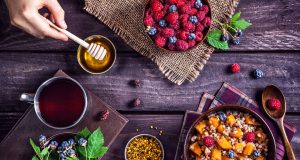
4 Tips to Stay on Balance During Fall

1. Choose Warm over Cold.
In the culture of iced drinks it might be difficult to accept the fact that cold can be bad not only for a sore throat. According to Ayurveda Vata qualities are cold, dry, rough, and constantly moving. To counterbalance Vata we need to provide nourishing, grounding, warm food and environment. Diet is the simplest way to provide the missing nourishment. Some foods are easy to qualify as cold just by touching or tasting them, such as ice cream. But the list doesn’t end here. Ayurveda considers most raw items to be cold: salads, sushi, milk, uncooked vegetables and some fruits. Cooked warm foods are a lot easier to digest and absorb for a weakened Vata digestion. Adding warming spices will help change the quality of foods making them warmer. Most spices are warming and enhance digestion, so cook with a combination of spices that appeals to your taste buds and is appropriate for the dish you are making. Ayurvedic spices such as small quantities of turmeric, cumin, coriander, cinnamon, dried ginger, black pepper and saffron offer flavor, aroma and healing wisdom. To reduce a heavy stomach feeling after a meal, sip some ginger or cinnamon tea.

2. Moist/Juicy is Better than Dry/Crunchy.
Vata is dry and rough by nature and anything dry will aggravate it even more. To keep vata balanced, one’s diet has to contain plenty of fluids, including juicy fruits, soups, stews, and well cooked grain dishes. Stay away from dried fruits, crackers, and cold cereals. Anything crunchy and crispy is not a good Vata choice. Pureed soups, cooked fruit, hot cereal, rice pudding and hot nourishing beverages such as nut milks or warm milk are excellent “comfort” foods and help pacify aggravated Vata. If you have sandwiches on a regular basis, make sure they are not too dry. For example, add grilled veggies or have it with a vegetable soup.

3. 3 Powerful S’s
The three ayurvedic tastes that help balance Vata are sweet, sour and salty, so include more of these tastes in your daily diet. Grains, citrus fruits, and salted toasted sunflower or pumpkin seeds make good snack choices. Apple cider available in abundance on all farmer’s markets, can be a perfect afternoon pick me up. Avoid foods that taste bitter, astringent, or pungent. Carrots, asparagus, tender leafy greens, beets, sweet potatoes and summer squash such as zucchini and lauki squash are the best vegetable choices for the Fall season. Vegetables can be combined with grains or mung beans for satisfying one-dish meals.

4. Soft and Warm To Touch
Diet is important to staying balanced and healthy but other factors of our surrounding can have a big influence as well. During Vata season, October – Feb try to add more things that are warm and soft into your life. Get a soft to touch sweater, change your rugs to softer ones, develop and nurture warm kind relationships with yourself and others. Try to surround yourself with warm colors. Orange red, yellow can lift your mood and help create a positive outlook. Whether you choose to update your wardrobe or buy a soft new couch throw is up to you. You can also show your creative side and arrange a Fall bouquet on your table. Use pumpkins, squashes, dry or fresh flowers, and pretty fall leaves that you found in the park. Most importantly, stay warm!

To learn more Vata balancing tips, join me this Saturday, Nov 6 for a fun an Ayurvedic Brunch! Learn fun and useful Vata recipes and Vata balancing techniques that will take you through the entire season. RSVP HERE!

Happy Vata Season!

Nadya